Home | MyGov

Accessibility
Accessibility Tools
Color Adjustment
Text Size
Navigation Adjustment
Screen Reader iconScreen Reader

Inviting suggestions on the Draft Vision document for Phase III of eCourts Project

Start Date :
Apr 08, 2021
Last Date :
May 31, 2021
23:45 PM IST (GMT +5.30 Hrs)
Submission Closed

The e-Committee of the Supreme Court has been overseeing the implementation of the e-Courts Project, conceptualized under the "National Policy and Action Plan for Implementation of ...

The e-Committee of the Supreme Court has been overseeing the implementation of the e-Courts Project, conceptualized under the "National Policy and Action Plan for Implementation of Information and Communication Technology (ICT) in the Indian Judiciary-2005". It is the mission mode project carried out by the Department of Justice.

The e-Committee has evolved in terms of its roles and responsibilities over the last fifteen years. The objectives of the e-Committee include:
The Interlinking of all courts across the country.
ICT enablement of the Indian judicial system.
Enhancing judicial productivity.
Making the justice delivery system accessible, cost-effective, transparent, and accountable.
Providing citizen-centric services.

As Phase-II will soon conclude, the draft vision document for Phase III is prepared. This draft Vision Document outlines an inclusive, agile, open, and user-centric vision for courts in Phase III of the e-Courts Project.

Phase III envisions digital courts that deliver justice as a service to all, beyond simply replicating offline processes digitally. The use of technology in the judiciary is therefore guided by two facets central to Gandhian thought—access and inclusion. In addition, the core values of trust, empathy, sustainability, and transparency provide the guardrails for achieving the founding vision.

Building over the advancements made in Phases I & II of the project, this document articulates the need to exponentially advance the digitization of courts by (a) simplifying procedures, (b) creating a digital infrastructure, and the (c) establishment of the right institutional and governance framework, such as technology offices at various levels to enable the judiciary to appropriately employ technology. It articulates key goals for putting in place the digital infrastructure and services for Phase III.

This vision document envisions a platform architecture for technology that will enable diverse digital services to further evolve over time at scale. It also is designed to take an ecosystem approach that leverages the existing capacities in different stakeholders such as civil society leaders, universities, practitioners, and technologists to realise this future.

The e-Committee, Supreme Court of India has called for comments, suggestions, and inputs on the draft vision document for its 3rd phase of the e-Courts Project from all its stakeholders to refine and plan the implementation of the next phase of the e-Courts Project.

Click here to read the Draft Vision Document.

The last date to receive inputs is 31st May 2021.

Reset
Showing 1705 Submission(s)
Ramit Bagga
Ramit Bagga 5 years 2 months ago
All the courts getting digitally interlinked shall give a big boost to ecourts project, thereby ensuring enhanced accountability, transparency, litigants satisfaction thereby reducing the justice delivery time, resources, expenditure of one & all.
Ramit Bagga
Ramit Bagga 5 years 2 months ago
As per the calendar, the number of non-sitting days, including Saturday and Sunday, come to 176 days for the apex court. It translates into an average sitting of 16 days per month. When there are nearly 60,000 cases pending in SC, it has five vacations in its annual calendar, including summer break of 45 days, one-week Holi vacation, and winter break of 15 days. It also closes for 10 days for Dussehra and Diwali.
Ramit Bagga
Ramit Bagga 5 years 2 months ago
1, Supreme Court officially works for 190 days/year. Now deduct strikes, stoppage of work, Bharat bandh etc. It seems Indian courts do not work for more than 5 months/year. 2, The system of long vacations for courts — a British era practice — continues even after more than seven decades of Independence. 3, As per the calendar, the number of non-sitting days, including Saturday and Sunday, come to 176 days for the apex court. It translates into an average sitting of 16 days per month.
Sunita Vijay Pandharpatte
Sunita Vijay Pandharpatte 5 years 2 months ago
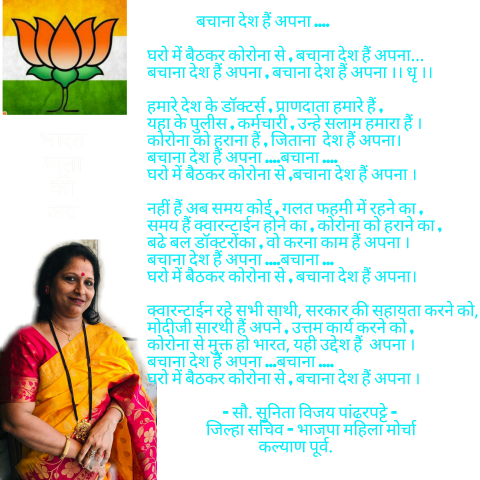
मोदीजी , अगर भारत को अच्छे दिन लाने हैं , तो - सरकार स्थापन करते वक्त संविधान को मद्दे नजर रखते हुये एक नियम हैं , और उस नियम का पालन करते हुए जो पार्टी चुनके आये हुए MLC का कोरम पुरा कर सके , वही पार्टी सरकार स्थापन करेगी ऐसा ही कुछ नियम हैं। आपको उसे सुधारित करना हैं ...कैसे ? *** जिस पार्टी के जादा सांसद चुन के आते हैं , वही पार्टी सरकार बनायेगी। इधर उधर के सांसद लेके कोरम पुरा करके कोई सरकार नहीं बना सके । इसलीये कानून में जो भी सुधार लाने हैं , लाओ । मगर ये गठबंधन का ट्रेंड बंद करो।
GirijaShankar Mohapatra
GirijaShankar Mohapatra 5 years 2 months ago
BJP workers murdered after election result is out. Houses are burnt. Women are subjected to abuse. People in thousands are leaving Bengal and going to Assam and Odisha. Why Central Govt and Supreme court are mute spectator to such anarchy. Are they waiting for more murders and the deabodies all over Bengal. As a nationalist, am forced to place my view before Govt which is absolute deaf and so also Apex court....
Prabhat Kumar
Prabhat Kumar 5 years 2 months ago
आदरणीय प्रधानमंत्री जी उत्तर प्रदेश में आयोजित किए गए पंचायत चुनाव के अंतर्गत विभिन्न जनपदों में प्रशासन द्वारा की गई काउंटिंग में विजयी घोषित किए गए उम्मीदवारों में से कुछ को प्रमाण पत्र जारी नहीं किया गया तथा गलत तरीके से हारे हुए प्रत्याशी को प्रमाण पत्र जारी कर विजेता घोषित कर दिया गया, । कुछ जनपद के अफसरों द्वारा की गई इस कार्रवाई से ना केवल निष्पक्ष चुनाव कराने की निर्वाचन आयोग की छवि धूमिल हुई है ,बल्कि वर्तमान सरकार की भी छवि आम जनता के मन में धूमिल हुई है।
Diana Mihir Mishra
Diana Mihir Mishra 5 years 2 months ago
Cases are pending in courts for many years. Inspite of that courts are closed for summer vacation and winter vacation. The government should abolish the vacation for courts. 2. Adjournment should not be allowed. 3. There should be time frame for cases. 4. Appeals should be restricted. 5. Frivolous cases should not come to Supreme Court. 6. Incentives to judges based on number of verdicts given.
NildeepBhattacharjee
NildeepBhattacharjee 5 years 2 months ago
Idea is good sir...but it should be done on vacations..so that piles of cases should be given verdict..first track court and special sessions should be 1st priority on ecourt..it must be on a secured network..
Alka Vasudeva
Alka Vasudeva 5 years 2 months ago
Dear Sir the initiative is indeed good and much awaited but there is no mention that how the e courts be approched by citizens. It will be highly appreciated that each private institution be told to create a link where grievances can be posted. On the lines of RTI courts, there must be time bound justice delivery system with transparency.