Home | MyGov

Accessibility
Accessibility Tools
Color Adjustment
Text Size
Navigation Adjustment
Screen Reader iconScreen Reader

Inviting suggestions on the Draft Vision document for Phase III of eCourts Project

Start Date :
Apr 08, 2021
Last Date :
May 31, 2021
23:45 PM IST (GMT +5.30 Hrs)
Submission Closed

The e-Committee of the Supreme Court has been overseeing the implementation of the e-Courts Project, conceptualized under the "National Policy and Action Plan for Implementation of ...

The e-Committee of the Supreme Court has been overseeing the implementation of the e-Courts Project, conceptualized under the "National Policy and Action Plan for Implementation of Information and Communication Technology (ICT) in the Indian Judiciary-2005". It is the mission mode project carried out by the Department of Justice.

The e-Committee has evolved in terms of its roles and responsibilities over the last fifteen years. The objectives of the e-Committee include:
The Interlinking of all courts across the country.
ICT enablement of the Indian judicial system.
Enhancing judicial productivity.
Making the justice delivery system accessible, cost-effective, transparent, and accountable.
Providing citizen-centric services.

As Phase-II will soon conclude, the draft vision document for Phase III is prepared. This draft Vision Document outlines an inclusive, agile, open, and user-centric vision for courts in Phase III of the e-Courts Project.

Phase III envisions digital courts that deliver justice as a service to all, beyond simply replicating offline processes digitally. The use of technology in the judiciary is therefore guided by two facets central to Gandhian thought—access and inclusion. In addition, the core values of trust, empathy, sustainability, and transparency provide the guardrails for achieving the founding vision.

Building over the advancements made in Phases I & II of the project, this document articulates the need to exponentially advance the digitization of courts by (a) simplifying procedures, (b) creating a digital infrastructure, and the (c) establishment of the right institutional and governance framework, such as technology offices at various levels to enable the judiciary to appropriately employ technology. It articulates key goals for putting in place the digital infrastructure and services for Phase III.

This vision document envisions a platform architecture for technology that will enable diverse digital services to further evolve over time at scale. It also is designed to take an ecosystem approach that leverages the existing capacities in different stakeholders such as civil society leaders, universities, practitioners, and technologists to realise this future.

The e-Committee, Supreme Court of India has called for comments, suggestions, and inputs on the draft vision document for its 3rd phase of the e-Courts Project from all its stakeholders to refine and plan the implementation of the next phase of the e-Courts Project.

Click here to read the Draft Vision Document.

The last date to receive inputs is 31st May 2021.

Reset
Showing 1705 Submission(s)
Brajesh Kumar Tiwari
Brajesh Kumar Tiwari 5 years 4 months ago
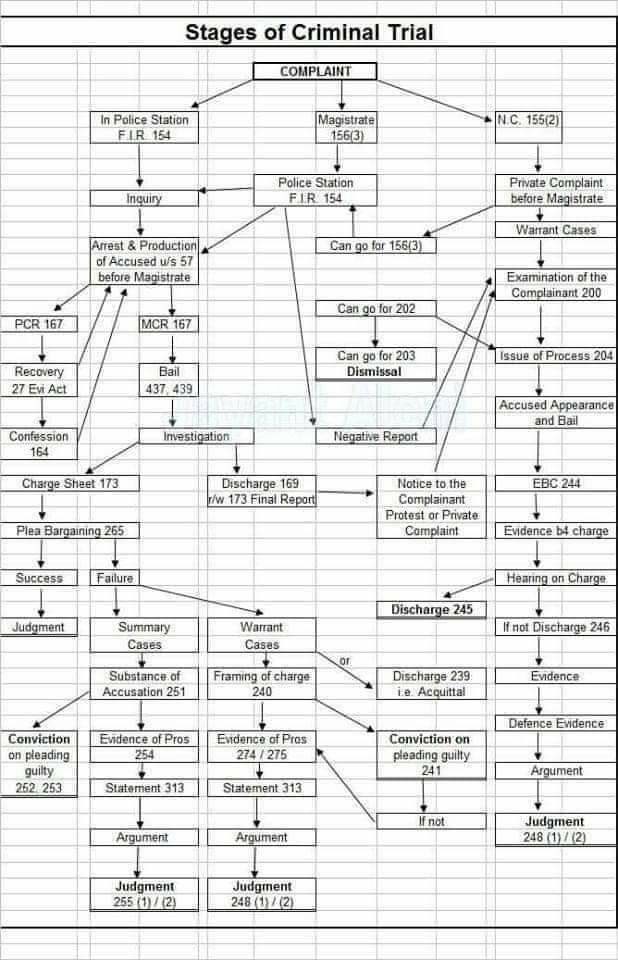
कोर्ट और जूडिशल व्यवस्था को व्यावहारिक बना कर ही eCourts को लंबे समय के लिए उपयोग मे रखा जा सकता है | इसके लिए संलग्न proforma को सिस्टम मे संयोजित करना आवश्यक है |
mygov_161816304253049011
Rajagopalan Narayanan
Rajagopalan Narayanan 5 years 4 months ago
We've to revive our dispute resolution mechanism at Panchayat level thro counseling to rid court cases This is what made Bharat great without British style courts in our ancient times The Panchayats should be tech enabled for this
sundarraj nagaraj
sundarraj nagaraj 5 years 4 months ago
Civil disputes where builder mafia in collusion with land owner and government officials encroaching senior citizens plots ,when the illegality of the transaction has been proved in lower courts ,why should people with money power be allowed to approach higher courts ,delaying justice to senior citizens of this democratic nation,any government which cares for senior citizens should in consultation with supreme court should direct lower courts to pass final verdict restring further appeal.
Santanu Datta
Santanu Datta 5 years 4 months ago
Grievance redressal mechanism can not be successful without access of justice and departments dealing with public grievance don,t have access to justice. So these departments actually can not give any service to public. Employees of these dpartments are the burden to public. In place of these departments only eCourt project can solve all the ordinary problems and grievance of the public. This is a great move ,must bring into reality immediately. Grass root level of society should have justice.
Rajesh Madhav Mathkar
Rajesh Madhav Mathkar 5 years 4 months ago
This is really a fantastic initiative . The project will certainly be a game changer in the Judicial system . Will help deliver Justice at a mych faster rate to the citizens
Akash Bansal
Akash Bansal 5 years 4 months ago
Ecourt should first try to solve problem of safety of witnesses , he should be checked at financial break ground ( if recent transaction), criminal record , number of time witnessed for someone, link with lawyers and many other pointer which are currently loophole in our system , Other parameter should be categorisation of cases very clearly to see where our security has to work or society has to work upon to improve aspect