Home | MyGov

Accessibility
ऐक्सेसिबिलिटी टूल
कलर एडजस्टमेंट
टेक्स्ट साइज़
नेविगेशन एडजस्टमेंट

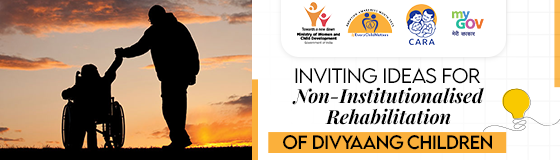
Inviting Ideas for Non-Institutionalised Rehabilitation of Divyaang Children

Inviting Ideas for Non-Institutionalised Rehabilitation of Divyaang Children
आरंभ करने की तिथि :
Oct 01, 2025
अंतिम तिथि :
Nov 30, 2025
17:30 PM IST (GMT +5.30 Hrs)
प्रस्तुतियाँ समाप्त हो चुके

In 2025, the Central Adoption Resource Authority (CARA) is placing special focus on promoting family-based care for children with special needs (Divyaang children). In ...

In 2025, the Central Adoption Resource Authority (CARA) is placing special focus on promoting family-based care for children with special needs (Divyaang children). In collaboration with MyGov, CARA invites all Indian citizens to participate in an important national discussion on the theme:
“Non-institutionalized Rehabilitation of Children with Special Needs (Divyaang Children)”

This initiative seeks to create a collaborative platform where citizens can:
1. Share insights on the challenges and barriers in the identification and adoption of children with special needs
2. Suggest innovative ideas, strategies, or solutions to strengthen the adoption ecosystem
3. Contribute to policy-making by offering actionable recommendations to ensure a loving family environment for every child, especially those currently residing in Specialized Adoption Agencies (SAAs) and Child Care Institutions (CCIs)

Your thoughtful suggestions can play a key role in shaping a more inclusive, compassionate, and efficient adoption framework for Divyaang children.

Who can participate?
All Indian citizens are welcome to join the conversation and submit their ideas.

Why participate?
Selected entries may be featured in national-level publications, exhibitions, and even considered in policy discussions aimed at improving the lives of children with special needs.

Let’s work together to ensure every child finds a loving family and a brighter future. Join the discussion today and be a voice for change!

फिर से कायम कर देना
777 सबमिशन दिखा रहा है
Parekh Shivam Bhupendra bhai
Parekh Shivam Bhupendra bhai 1 year 1 week पहले
My Suggestions: 1. User-Friendly Interface: Simplify government websites and portals (like MyGov, CARA) with clear navigation, faster loading, and language support in regional languages. 2. Accessibility for All: Introduce screen-reader compatibility, voice-based guidance, and simple visual icons to help users with visual or cognitive challenges. 3. Digital Safety Dialogues: Organize regular “Digital Safety Dialogues” to educate citizens — especially adoptive parents — on protecting children's data, photos, and online identities. 4. Digital Feedback Window: Allow citizens to report technical or accessibility issues directly from the website so they can be fixed promptly. 5. Inclusive Tech Workshops: Conduct training programs in collaboration with NGOs and schools to promote safe, responsible, and easy digital usage for Divyaang children and their caregivers. By ensuring digital inclusiveness, India can take a major step toward the vision of Digital India.
balkrishannagar
balkrishannagar 1 year 1 week पहले
वंदे मातरम जय हिंद मैं अपने भारत देश से बहुत प्रेम करता हूं मैंने 20 वर्ष पहले से ही एक घर पर आकर सन्यास अपनाकर वृंदावन वास किया है और 15 वर्ष निरंतर ध्यान साधना की और मेरे पास साधना के द्वारा अद्भुत ज्ञान की प्राप्ति हुई मेरे पास दुनिया की सबसे बड़ी प्रॉब्लम आतंकवाद रेप केस और भ्रष्टाचार गरीबी आदि का समाधान है मैं अपने यह विचार भारत सरकार को बताना चाहता हूं जिससे देश ही नहीं पूरे विश्व में शांति स्थापित हो जाए धन्यवाद
Prajakata Vishal Deshmukh
Prajakata Vishal Deshmukh 1 year 1 week पहले
दिव्यांग बच्चो का आत्मविश्वास बढ़ाने का काम बहुत महत्वपूर्ण है।उसके लिए उन्हें कुछ प्रशिक्षण देके आत्मनिर्भर बनाने में उनकी मदत करना ये पहला काम है।ताकि वो आत्मसम्मान से जी सके।
SANTOSHI BADAIK
SANTOSHI BADAIK 1 year 1 week पहले
To, The Honorable Prime Minister of India Respected Sir, I hope this message finds you well. Inviting Ideas for Non-Institutionalised Rehabilitation of Divyaang Children. 1.Community-Based Rehabilitation (CBR): Empowering children and families in their own communities. 2. Home-Based Therapy Services: Providing physiotherapy, occupational therapy, and speech therapy at home. 3. Inclusive Education: Enabling children to attend regular schools and participate in activities with peers. 4. Parent Support Groups: Providing emotional support and sharing experiences among parents. 5. Skill Development Programs: Building life skills, such as self-care, social skills, and problem-solving. These ideas focus on empowering Divyang children and their families, promoting inclusion, and enhancing their overall well-being.