- चंडीगढ़ संघ राज्य क्षेत्र
- रचनात्मक क्रियास्थल
- दादरा नगर हवेली केन्द्रीय शासित प्रदेश
- दमन और दीव केन्द्रीय शासित प्रदेश
- प्रशासनिक सुधार और लोक शिकायत विभाग
- जैव प्रौद्योगिकी विभाग
- व्यापार महकमा
- उपभोक्ता मामले विभाग
- औद्योगिक नीति और संवर्धन विभाग
- डाक विभाग
- विज्ञान और प्रौद्योगिकी विभाग
- दूरसंचार विभाग
- डिजिटल भारत
- आर्थिक मामले
- एक भारत श्रेष्ठ भारत
- ऊर्जा संरक्षण
- व्यय प्रबंधन आयोग
- खाद्य सुरक्षा
- गांधी@150
- बालिका शिक्षा
- सरकारी विज्ञापन
- हरित भारत
- अतुल्य भारत!
- इंडिया टेक्सटाइल
- भारतीय रेल
- Indian Space Research Organisation - ISRO
- रोज़गार निर्माण
- LiFE- 21 दिन का चैलेंज
- मन की बात
- मैला ढ़ोने की प्रथा से मुक्त भारत
- पूर्वोत्तर क्षेत्र विकास मंत्रालय
- कृषि और किसान कल्याण मंत्रालय
- रसायन और उर्वरक मंत्रालय
- नागरिक उड्डयन मंत्रालय
- कोयला मंत्रालय
- कारपोरेट कार्य मंत्रालय
- संस्कृति मंत्रालय
- रक्षा मंत्रालय
- पृथ्वी विज्ञान मंत्रालय
- शिक्षा मंत्रालय
- Ministry of Electronics and Information Technology
- पर्यावरण, वन और जलवायु परिवर्तन मंत्रालय
- विदेश मंत्रालय
- वित्त मत्रांलय
- स्वास्थ्य और परिवार कल्याण मंत्रालय
- गृह मंत्रालय
- आवास और शहरी मामलों के मंत्रालय
- सूचना और प्रसारण मंत्रालय
- जल शक्ति मंत्रालय
- कानून और न्याय मंत्रालय
- सूक्ष्म, लघु और मध्यम उद्यम मंत्रालय (MSME)
- पेट्रोलियम और प्राकृतिक गैस मंत्रालय
- ऊर्जा मंत्रालय
- सामाजिक न्याय और अधिकारिता मंत्रालय
- सांख्यिकी एवं कार्यक्रम क्रियान्वयन मंत्रालय
- इस्पात मंत्रालय
- महिला एवं बाल विकास मंत्रालय
- माईगव मूव - वॉलंटियर
- नई शिक्षा नीति
- न्यू इंडिया चैंपियनशिप
- नीति आयोग
- भारत के विकास के लिए एनआरआई
- ओपन फोरम
- PM Live Events
- राजस्व और जीएसटी
- ग्रामीण विकास
- सांसद आदर्श ग्राम योजना
- सक्रिय पंचायत
- कौशल विकास
- स्मार्ट सिटी
- भारत में खेलकूद
- स्वच्छ भारत
- जनजातीय विकास
- जलागम प्रबंधन
- राष्ट्र निर्माण में युवाओं की भागीदारी
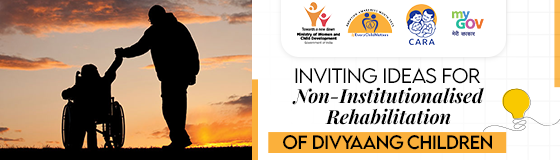
Inviting Ideas for Non-Institutionalised Rehabilitation of Divyaang Children

आरंभ करने की तिथि :
Oct 01, 2025
अंतिम तिथि :
Nov 30, 2025
17:30 PM IST (GMT +5.30 Hrs)
In 2025, the Central Adoption Resource Authority (CARA) is placing special focus on promoting family-based care for children with special needs (Divyaang children). In ...
सभी टिप्पणियां देखें
विशेष रुप से प्रदर्शित
New Comments
टिप्पणियाँ (2)
टिप्पणियाँ (2)
टिप्पणियाँ (1)
टिप्पणियाँ (1)
टिप्पणियाँ (2)
टिप्पणियाँ (1)
टिप्पणियाँ (2)
टिप्पणियाँ (2)
टिप्पणियाँ (1)
टिप्पणियाँ (1)
777 सबमिशन दिखा रहा है
Dr TASHANT ANEJA
1 year 1 week पहले
1)I HAVE ONE IDEA. WHICH MAY HELP FINDING THE RIGHT PARENTS FOR. DISABLED CHILD.
A APP WHICH WORK LIKE METRIMONIAL APP.
THIS IS HOW IT WORKS:-
PROFILE OF PARENTS WILL BE PUT ONLINE ON PORTAL . BOTH CHILDERN AND PARENTS CAN SWIPE RIGHT ON IT. THEN DETAILED VERSION OF BOTH PARTY WILL BE OPEN.
2) CONNECTING CHILDERN ONLINE TO EACH OTHER WILL HELP TOO. BASED UPON THERE DISABILITY THEY CAN CONNECT TO EACH OTHER.LERAN AND TEACH EACH OTHER SKILLS.BECAUSE CARING A DISABLED CHILD IS WHOLE ALOT OF WORK. SO MAKING THEM INDEPENDENT IS IMPORTANT. SO THEY ARE ACCEPTED EASILY BY PARENTS.
3) REHABILITATION CENTRE WHERE CHILDERN ARE IN CONSTANT CONNECTION WITH HOSPITALS. WHERE THEY ARE TAUGHT ACCORDING TO THERE DISABILITY. REGULAR FREE SESSIONS. HERE PARENTS CAN COME TOO TO SEE IF THEY FIND A MATCH.
4) PROVIDING SCHOLARSHIPS TO STUDENTS WHO HAS EXPERIENCE IN WORKING IN THESE REHAB CENTRES WILL ATTRACT MORE WORK FORCE .CAN BE A NURSE, OR PHYSIOTHERAPIST OR ORTHO ASSISTANT. GIVING THEM POINTS IN NEET UG
पसंद
(5)
नापसन्द
(1)
जवाब दो
स्पैम की रिपोर्ट करें
GARAIYA AKSHAY
1 year 1 week पहले
Adoption processes for Divyaang children are fraught with procedural hurdles, including exhaustive documentation and home studies that intimidate prospective families, despite legal safeguards under child welfare laws. Many children in unregulated care homes remain off the radar, invisible to matching systems that prioritize healthier profiles due to unfounded fears of added responsibilities. Insights shared by adopters and advocates could demystify these steps, emphasizing the joys and support systems available, to encourage more inclusive placements.
पसंद
(5)
नापसन्द
(1)
जवाब दो
स्पैम की रिपोर्ट करें
GARAIYA AKSHAY
1 year 1 week पहले
Community-based rehabilitation thrives on multi-level involvement, from local self-help groups training caregivers to schools incorporating inclusive curricula, yet resource shortages hinder widespread rollout. Vocational programs tailored for teens with special needs often feel tokenistic, lacking real-world applicability. Shared ideas on the platform might include mentorship pairings or skill-sharing workshops, turning barriers into collaborative opportunities for sustainable growth.
पसंद
(8)
नापसन्द
(1)
जवाब दो
स्पैम की रिपोर्ट करें
GARAIYA AKSHAY
1 year 1 week पहले
Legal frameworks provide a foundation but fall short in specifics for Divyaang adoptions, such as streamlined guardianship for those with cognitive challenges, leaving gaps in enforcement and awareness. Coordination between agencies often lags, stranding children in limbo. Citizens could use the platform to flag these inconsistencies, proposing reforms like dedicated adoption counselors to expedite matches and integrate rehabilitation plans from the outset.
पसंद
(7)
नापसन्द
(1)
जवाब दो
स्पैम की रिपोर्ट करें
GARAIYA AKSHAY
1 year 1 week पहले
Adoption processes for Divyaang children are fraught with procedural hurdles, including exhaustive documentation and home studies that intimidate prospective families, despite legal safeguards under child welfare laws. Many children in unregulated care homes remain off the radar, invisible to matching systems that prioritize healthier profiles due to unfounded fears of added responsibilities. Insights shared by adopters and advocates could demystify these steps, emphasizing the joys and support systems available, to encourage more inclusive placements.
पसंद
(8)
नापसन्द
(1)
जवाब दो
स्पैम की रिपोर्ट करें
GARAIYA AKSHAY
1 year 1 week पहले
Cultural stigma emerges as a formidable barrier, with disabilities sometimes perceived as familial burdens or karmic afflictions, prompting parents to conceal rather than seek help. This reluctance not only delays identification but also perpetuates cycles of isolation, affecting siblings and extended families alike. Personal testimonies on the platform could humanize these struggles, challenging outdated beliefs through narratives of resilience and normalcy, thereby cultivating a supportive network that normalizes seeking assistance.
पसंद
(7)
नापसन्द
(1)
जवाब दो
स्पैम की रिपोर्ट करें
GARAIYA AKSHAY
1 year 1 week पहले
Cultural stigma emerges as a formidable barrier, with disabilities sometimes perceived as familial burdens or karmic afflictions, prompting parents to conceal rather than seek help. This reluctance not only delays identification but also perpetuates cycles of isolation, affecting siblings and extended families alike. Personal testimonies on the platform could humanize these struggles, challenging outdated beliefs through narratives of resilience and normalcy, thereby cultivating a supportive network that normalizes seeking assistance.
पसंद
(6)
नापसन्द
(1)
जवाब दो
स्पैम की रिपोर्ट करें
GARAIYA AKSHAY
1 year 1 week पहले
Socio-economic constraints compound identification challenges, as low-income households prioritize survival over specialized evaluations, resulting in untreated conditions that worsen over time. In many areas, transportation costs to urban centers for testing deter follow-through, while digital divides limit access to online awareness resources. By voicing these realities on the collaborative space, citizens can propose low-cost innovations, like mobile screening vans or peer-led awareness drives, to democratize early detection and ensure no child slips through the cracks.
पसंद
(5)
नापसन्द
(1)
जवाब दो
स्पैम की रिपोर्ट करें
GARAIYA AKSHAY
1 year 1 week पहले
Identification of Divyaang children often stumbles at the grassroots level due to inconsistent screening mechanisms and overburdened primary health systems, particularly in remote villages where basic diagnostics are scarce. Frontline workers, such as those in early childhood centers, frequently lack specialized training to recognize subtle signs of conditions like autism or developmental delays, leading to overlooked cases. Platform users could share anecdotes of missed opportunities, such as families navigating language barriers during assessments, to advocate for simplified, multilingual tools that empower communities to act swiftly and prevent escalation of needs.
पसंद
(6)
नापसन्द
(1)
जवाब दो
स्पैम की रिपोर्ट करें
- अधिक देखें