Home | MyGov

Accessibility
ऐक्सेसिबिलिटी टूल
कलर एडजस्टमेंट
टेक्स्ट साइज़
नेविगेशन एडजस्टमेंट

Inviting Suggestions - Role of Tribal Communities in Viksit Bharat Initiative

Inviting Suggestions - Role of Tribal Communities in Viksit Bharats Initiative
आरंभ करने की तिथि :
Jun 15, 2025
अंतिम तिथि :
Jul 15, 2025
23:45 PM IST (GMT +5.30 Hrs)
प्रस्तुतियाँ समाप्त हो चुके

As part of the Government of India’s vision for Viksit Bharat (Developed India) by 2047, the Ministry of Tribal Affairs in collaboration with MyGov invites citizens to actively ...

As part of the Government of India’s vision for Viksit Bharat (Developed India) by 2047, the Ministry of Tribal Affairs in collaboration with MyGov invites citizens to actively participate in the initiative themed “Role of Tribal Communities in Viksit Bharat”. This initiative aims to recognize and celebrate the invaluable contributions of India’s tribal communities in shaping a sustainable, inclusive, and progressive nation.

Participants are encouraged to share their ideas, suggestions, and perspectives on how tribal knowledge systems, cultural heritage, sustainable practices, and community-led models can serve as guiding forces in India’s socio-economic, cultural, and environmental development.

Discussion is open to all Indian citizens. Selected ideas may be featured in national publications, exhibitions, and included in policy-level discussions.

फिर से कायम कर देना
560 सबमिशन दिखा रहा है
GARAIYA AKSHAY
GARAIYA AKSHAY 11 महीने 3 सप्ताह पहले
Social progress is a key component of Viksit Bharat, and empowering tribal communities through education, healthcare, and digital inclusion is critical. The literacy rate among PVTGs stands at 47.7%, significantly lower than the national average of 77.3%, highlighting the need for targeted interventions. The Eklavya Model Residential Schools (EMRS) have educated 1.18 lakh tribal students across 401 schools, with success stories like Bini Muduli from the Bonda tribe entering civil services in 2024. Similarly, a 15% rise in literacy among Chenchu girls in Andhra Pradesh demonstrates the impact of education-focused initiatives
GARAIYA AKSHAY
GARAIYA AKSHAY 11 महीने 3 सप्ताह पहले
Tribal knowledge systems offer solutions to modern challenges. Their expertise in medicinal plants, as seen in practices like Ayurveda and tribal healing systems, can enhance India’s healthcare framework by integrating traditional and modern medicine. The Viksit Bharat vision prioritizes sustainability, and tribal practices such as watershed management, crop rotation, and organic farming provide scalable models for eco-friendly agriculture. By promoting these practices, India can reduce the environmental impact of industrial agriculture, improve food security, and align with global sustainability goals.
GARAIYA AKSHAY
GARAIYA AKSHAY 11 महीने 3 सप्ताह पहले
Tribal communities are the custodians of India’s rich cultural heritage and biodiversity, which are vital pillars of Viksit Bharat. Living in harmony with nature for centuries, tribes such as the Dongria Kondh, Chenchu, and Baiga have preserved ecosystems through sustainable practices. Their traditional knowledge of forest management, medicinal plants, and organic farming aligns with the vision’s emphasis on environmental sustainability. For instance, the Dongria Kondh’s defense of Niyamgiri hills against mining activities demonstrates their role as stewards of ecological balance, protecting biodiversity hotspots critical for climate resilience. Similarly, the Chenchu’s forest stewardship in Andhra Pradesh exemplifies sustainable coexistence with nature, contributing to India’s environmental goals.
GARAIYA AKSHAY
GARAIYA AKSHAY 11 महीने 3 सप्ताह पहले
India’s ambitious vision of Viksit Bharat by 2047, marking the centenary of its independence, is a transformative agenda aimed at achieving economic prosperity, social progress, environmental sustainability, and effective governance. Central to this vision is the inclusion of all segments of society, particularly marginalized groups such as India’s tribal communities, also known as Scheduled Tribes (STs) or Adivasis. With over 10.45 crore tribal individuals comprising 8.6% of India’s population, including 75 Particularly Vulnerable Tribal Groups (PVTGs) numbering 44.64 lakh, tribal communities are integral to the nation’s identity and development trajectory. This essay explores the multifaceted roles of tribal communities in realizing Viksit Bharat, focusing on their contributions to sustainability, economic growth, cultural heritage, and national security, while addressing challenges and outlining strategies for their empowerment.
rupaliborade
rupaliborade 11 महीने 3 सप्ताह पहले
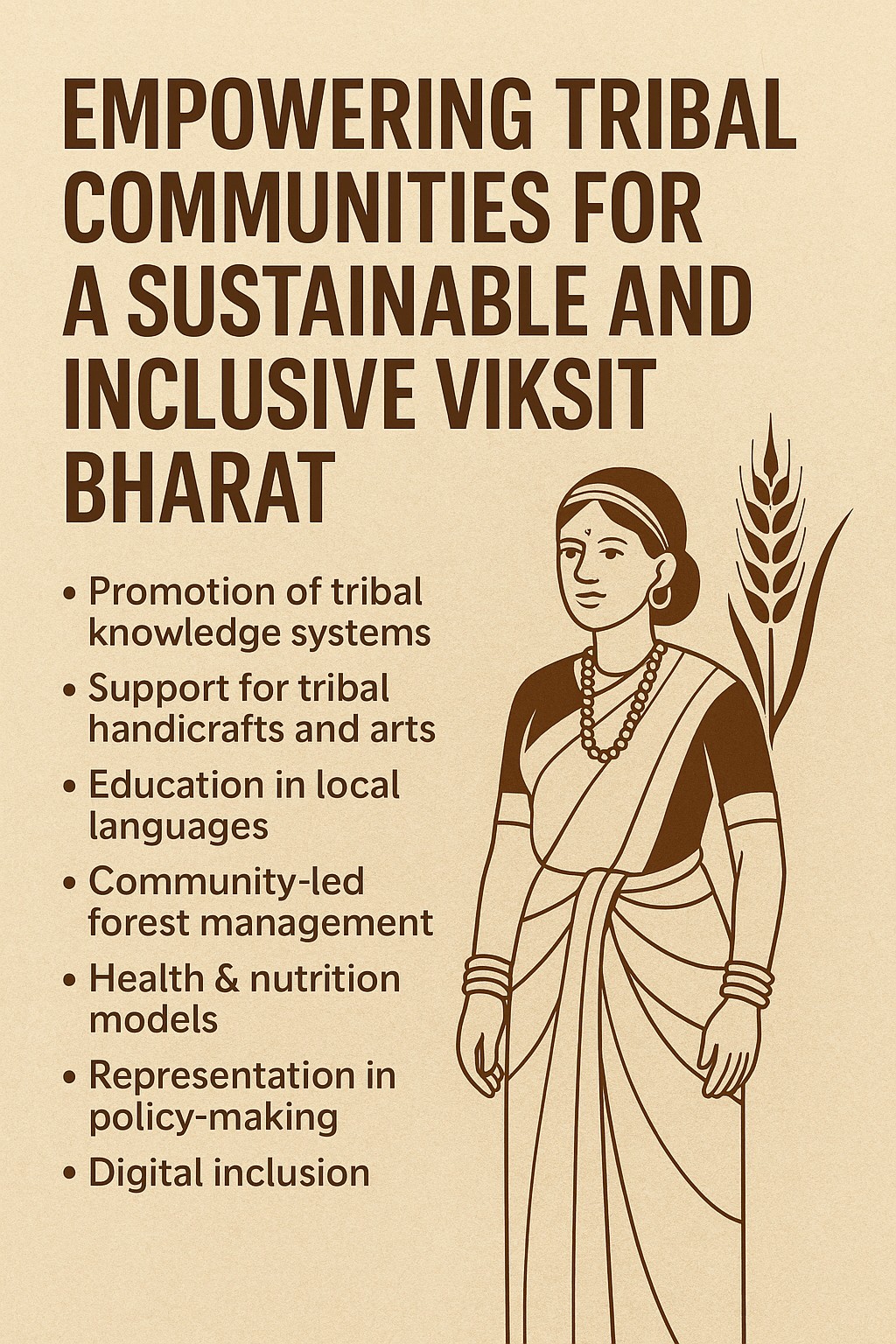
Title: Empowering Tribal Communities for a Sustainable and Inclusive Viksit BharatComment: India's tribal communities hold a treasure trove of wisdom, culture, and sustainable practices that are essential for building Viksit Bharat by 2047. To ensure their meaningful inclusion, the following steps can be taken: 1. Promotion of Tribal Knowledge Systems: Document and integrate tribal agricultural methods, herbal medicine practices, and water conservation techniques into mainstream development. 2. Support for Tribal Handicrafts and Arts: Establish more marketing hubs, e-commerce support, and GI tagging to promote tribal products globally. 3. Education in Local Languages: Develop learning materials in tribal dialects and recruit local teachers to preserve linguistic heritage while improving literacy. 4. Community-led Forest Management: Involve tribal groups in afforestation, wildlife conservation, and eco-tourism by recognizing their traditional forest rights. Health & Nutrition Mo
mygov_1751304423158943179
Chandan Sharma
Chandan Sharma 11 महीने 3 सप्ताह पहले
Suggestions: 1. Guardians of Biodiversity & Sustainable Living Narrative Angle: Tribals have lived in harmony with forests and nature for centuries. Their practices are models for climate-resilient agriculture, biodiversity conservation, and zero-waste living. Example: Promote tribal forest stewardship in central India as a blueprint for eco-governance. 2. Cultural Custodians & Unity Icons Narrative Angle: Tribal languages, music, rituals, and art forms enrich India’s heritage and foster unity in diversity. Example: Highlight how tribal festivals like Hornbill (Nagaland) or Bhagoria (MP) draw people from across communities. 3. Frontline Contributors in Defense & Security Narrative Angle: Many tribal youth serve in paramilitary and special forces. Their familiarity with terrain makes them invaluable in border defense and anti-insurgency operations. Example: Showcase recruitment drives in Jharkhand and the Northeast.