Home | MyGov

Accessibility
ऐक्सेसिबिलिटी टूल
कलर एडजस्टमेंट
टेक्स्ट साइज़
नेविगेशन एडजस्टमेंट

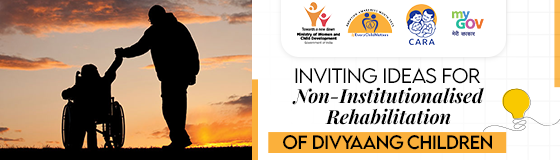
Inviting Ideas for Non-Institutionalised Rehabilitation of Divyaang Children

Inviting Ideas for Non-Institutionalised Rehabilitation of Divyaang Children
आरंभ करने की तिथि :
Oct 01, 2025
अंतिम तिथि :
Nov 30, 2025
17:30 PM IST (GMT +5.30 Hrs)
प्रस्तुतियाँ समाप्त हो चुके

In 2025, the Central Adoption Resource Authority (CARA) is placing special focus on promoting family-based care for children with special needs (Divyaang children). In ...

In 2025, the Central Adoption Resource Authority (CARA) is placing special focus on promoting family-based care for children with special needs (Divyaang children). In collaboration with MyGov, CARA invites all Indian citizens to participate in an important national discussion on the theme:
“Non-institutionalized Rehabilitation of Children with Special Needs (Divyaang Children)”

This initiative seeks to create a collaborative platform where citizens can:
1. Share insights on the challenges and barriers in the identification and adoption of children with special needs
2. Suggest innovative ideas, strategies, or solutions to strengthen the adoption ecosystem
3. Contribute to policy-making by offering actionable recommendations to ensure a loving family environment for every child, especially those currently residing in Specialized Adoption Agencies (SAAs) and Child Care Institutions (CCIs)

Your thoughtful suggestions can play a key role in shaping a more inclusive, compassionate, and efficient adoption framework for Divyaang children.

Who can participate?
All Indian citizens are welcome to join the conversation and submit their ideas.

Why participate?
Selected entries may be featured in national-level publications, exhibitions, and even considered in policy discussions aimed at improving the lives of children with special needs.

Let’s work together to ensure every child finds a loving family and a brighter future. Join the discussion today and be a voice for change!

फिर से कायम कर देना
777 सबमिशन दिखा रहा है
Dhananjay Pratap Singh
Dhananjay Pratap Singh 1 year 2 सप्ताह पहले
गोद लेने वाले परिवारों को आर्थिक सहायता व टैक्स में राहत दी जाए, ताकि वे बिना बोझ के दिव्यांग बच्चों की देखभाल कर सकें।
Shashi Kant Singh
Shashi Kant Singh 1 year 2 सप्ताह पहले
The old-age pension scheme and the widow pension scheme should be combined with a child rehabilitation scheme, especially for those aged 65 to 70. When these people live together, they will support each other, alleviate loneliness, and provide guidance.
Dr Mohamed Rameez
Dr Mohamed Rameez 1 year 2 सप्ताह पहले
Key Principles 1. Inclusion Over Isolation: Children learn best in familiar environments with peers. 2. Empower Families: Parents and caregivers are primary agents of rehabilitation. 3. Skill-Oriented: Focus on independence, employability, and social participation. 4. Technology-Enabled: Use affordable assistive devices and digital learning tools. 5. Community-Driven: Local engagement ensures sustainability, accessibility, and awareness.
Dr Mohamed Rameez
Dr Mohamed Rameez 1 year 2 सप्ताह पहले
Monitoring & Evaluation • Individual Development Plans (IDPs): Track progress in physical, cognitive, social, and vocational skills. • Community Feedback Mechanisms: Evaluate effectiveness of programs and adapt accordingly. • Digital Portfolios: Document therapy sessions, skill milestones, and achievements for continuous improvement.
Dr Mohamed Rameez
Dr Mohamed Rameez 1 year 2 सप्ताह पहले
Community Participation & Policy Support • Encourage local NGOs, panchayats, and volunteers to run community programs. • Offer subsidies, tax benefits, or grants for families supporting rehabilitation at home. • Include Divyang children in sports, cultural festivals, and public programs for visibility and empowerment.
Dr Mohamed Rameez
Dr Mohamed Rameez 1 year 2 सप्ताह पहले
Early Identification & Intervention • Home Visits & Screening Camps: Identify children with disabilities early for timely support. • Parent Training: Teach parents to monitor milestones, provide exercises, and seek therapy at home. • Tele-Rehabilitation Services: Virtual consultation with specialists for rural or remote areas.